The short answer
A medical license allows a doctor to practice. Board certification shows that the doctor completed approved training in a specialty, passed that specialty's examinations, and keeps meeting its requirements over time.
Certification is voluntary. It is the standard most hospitals and health plans look for, and it is the clearest outside check on a specialist's training that a patient can see.
Licensed, board eligible, board certified
Licensed
Granted by the state medical board. Required to practice medicine. It does not by itself show training in a specialty.
Board eligible
Has finished residency in the specialty but has not yet passed the board examinations. Boards allow only a limited number of years in this status.
Board certified
Has completed the training and passed the board's examinations, and takes part in continuing certification to keep it current.
Who issues it
The American Board of Medical Specialties (ABMS) oversees 24 member boards, one for each major area of medicine. Psychiatrists are certified by the American Board of Psychiatry and Neurology (ABPN), founded in 1934. Addiction Medicine is certified by the American Board of Preventive Medicine (ABPM) and is open to physicians from several specialties.
Osteopathic physicians may instead hold certification from an American Osteopathic Association board, which is also recognized. When a website says "board certified", it is fair to ask: by which board?
Subspecialty certification
After certification in general psychiatry, a psychiatrist can complete a further fellowship, usually one or two years, and pass a separate examination in a subspecialty. In psychiatry these include Addiction Psychiatry, Consultation-Liaison Psychiatry (formerly called Psychosomatic Medicine), Child and Adolescent Psychiatry, Geriatric Psychiatry and Forensic Psychiatry. Each one means additional training and an additional examination in a defined area.
That training matters most when a problem is complex: several medications already tried, a diagnosis that is still unclear, substance use alongside a psychiatric illness, or a medical illness affecting mood and thinking.
Staying certified
Certification is no longer granted for life. Board-certified psychiatrists take part in continuing certification, which includes ongoing education, regular self-assessment and review of their own practice. The board's public record shows whether a doctor is meeting these requirements.
How to check any doctor
- ABMS. Search the doctor's name with the ABMS certification lookup. It is free and covers all 24 member boards.
- The board itself. ABPN and ABPM each offer a free verification search on their own websites, including subspecialty certifications.
- The license. Your state medical board's website shows whether a license is active and lists any public actions.
Dr. Camsari's certifications
Dr. Camsari is board certified in four areas: Psychiatry, Addiction Psychiatry and Consultation-Liaison Psychiatry by ABPN, and Addiction Medicine by ABPM. Each can be confirmed with the boards above. Web copies of the certificates, with signatures withheld, are shown below and on his profile.
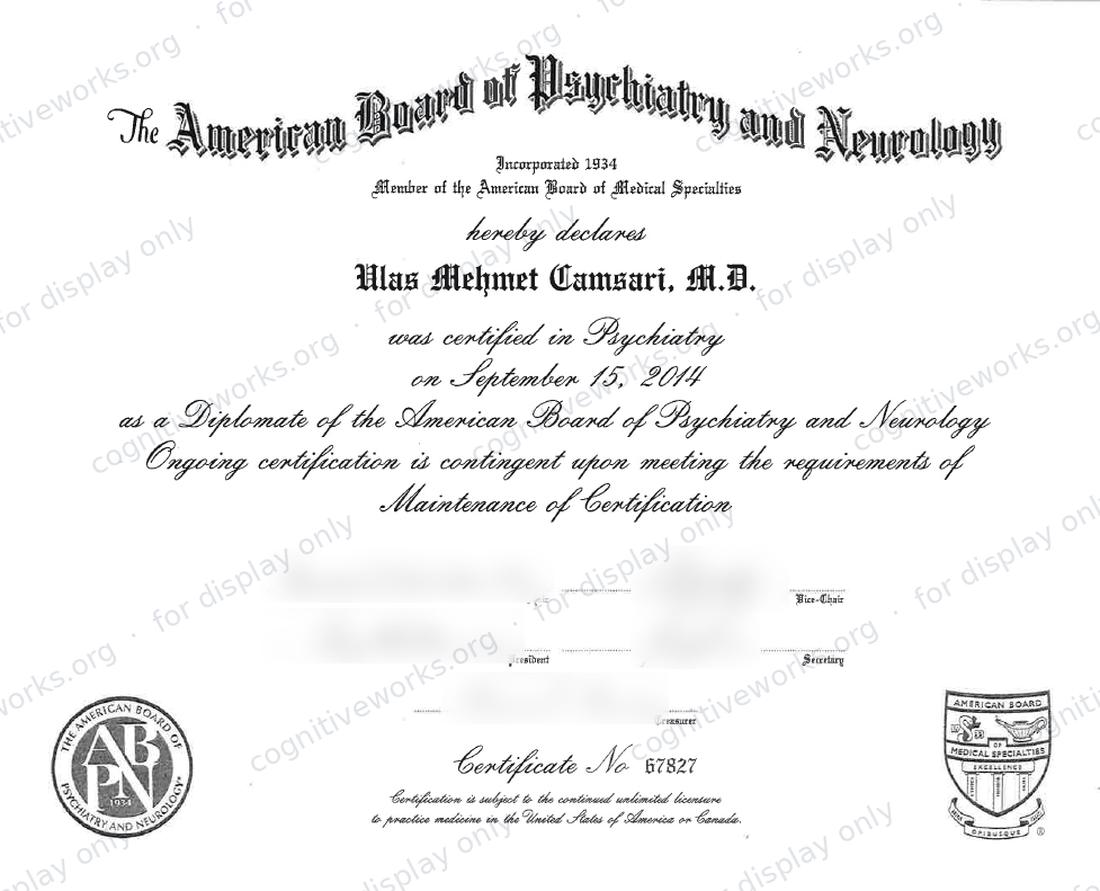 Psychiatry
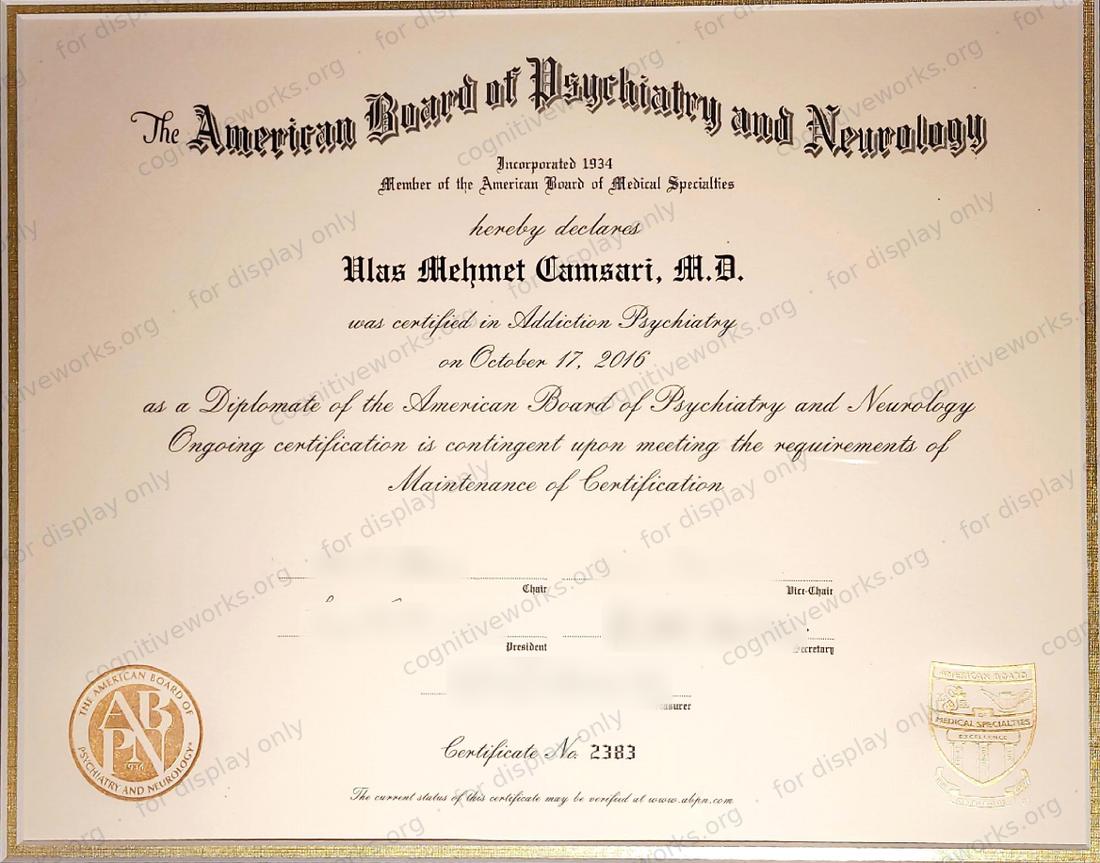 Addiction Psychiatry
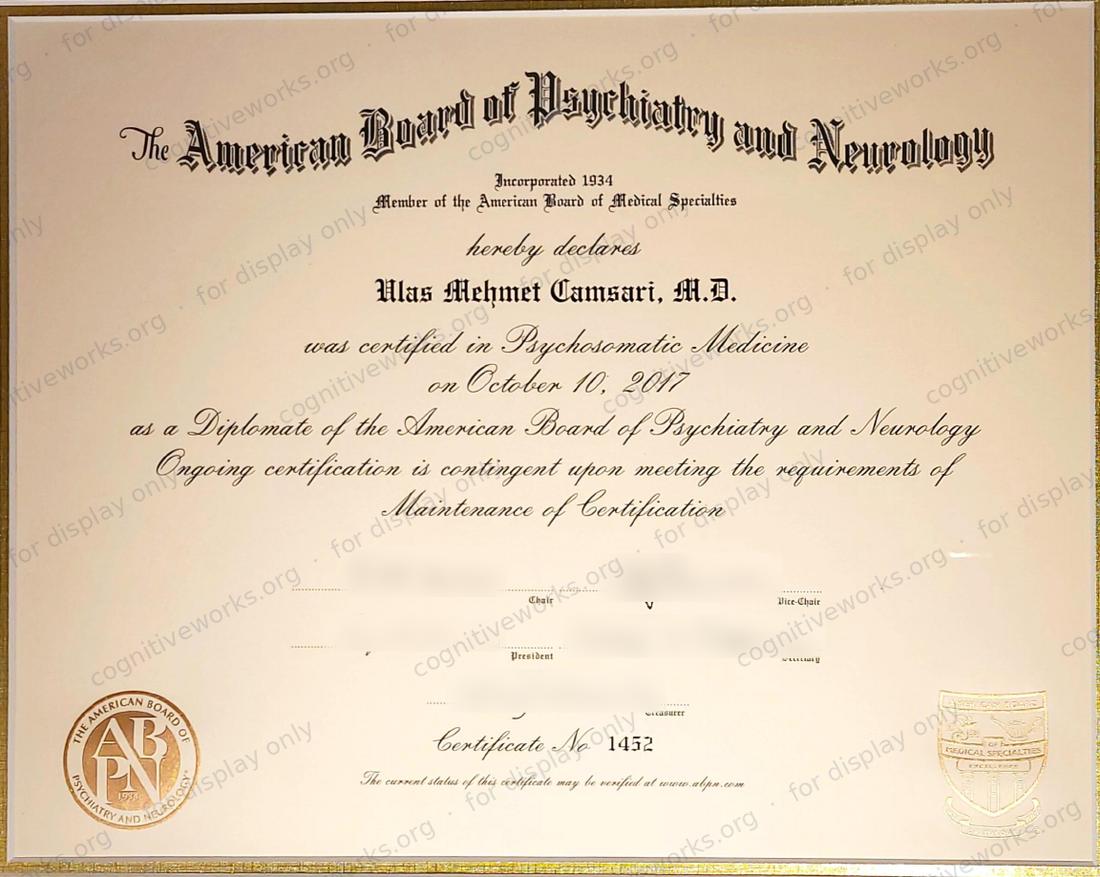 Consultation-Liaison Psychiatry
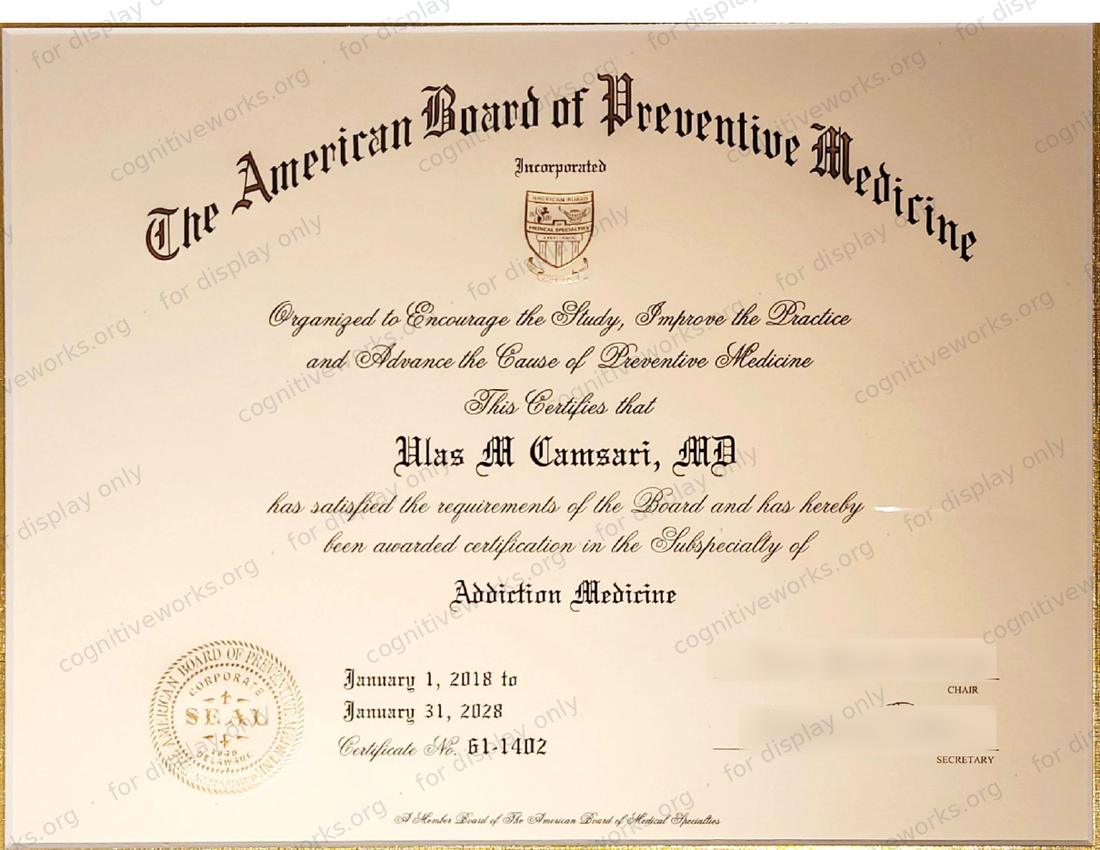 Addiction Medicine